
Published by Connection Compass
quiet coffee dates
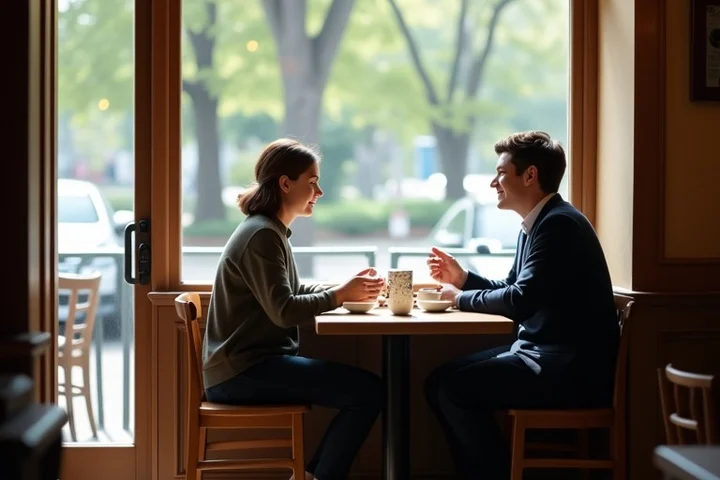
When two people want a short meeting centered on conversation, a quiet coffee or tea shop gives the date a visible shape: order, sit down, talk, and decide whether to leave. Choose a time when the room is likely to suit the desired noise level, and make sure the seating and sensory conditions work for both people. The turning point comes when conversation pauses. At a bare table with nowhere else to go, the pause can turn the exchange into a sequence of questions. A shop near a defined walk gives the pair a second move if the conversation has momentum, while the original drink still supplies an easy ending.
For an alcohol-free evening, tea or dessert keeps the same low-stakes structure. A casual meal outside its busiest period gives the conversation more time but also makes the date feel less brief, so it suits people who already want a longer window. An evening museum program or a low-volume activity venue shifts some of the pressure onto the setting; tickets, reservations, or a fixed start time then replace flexibility with a firm endpoint.
museum and gallery dates
- A museum or gallery supplies material for the first exchange: two people look at the same object, notice different details, and have something specific to discuss. That shared focus reduces the demand for continuous conversation. Quiet rooms change the balance. They support looking together, but they leave less room for sustained talking, so a date works better when both people are comfortable alternating brief observations with stretches of viewing.
- Set a contained viewing plan, such as a few rooms or one exhibition, so the visit has a natural finish. If interest remains after that endpoint, a drink, dessert, or short walk can follow while the venue remains a contained commitment. A ticketed or timed program gives the evening a reliable start and finish, but it also fixes more of the schedule in advance. That tradeoff fits people who prefer structure over a date that expands or ends moment by moment.
What outcome is realistic here?
A bookstore date produces smaller, repeated prompts rather than one long face-to-face exchange. Suppose two people agree to browse a section, point out a cover or title, and compare what caught their attention. Each shelf gives the conversation a fresh object, so a lull does not automatically require a new personal question.
The realistic outcome is a date with short observations, moments of browsing, and a clear exit after the shared circuit. Comments should suit the room's expected quiet level. If the bookstore has seating and the conversation becomes more direct, the date can settle there; if it does not, the browse still ends cleanly without forcing either person to invent a next stage.
walking dates
When sustained face-to-face conversation feels intense, a defined walk changes the arrangement. Two people move side by side through a populated park, market district, or public garden, and the route supplies pauses, things to notice, and moments when silence does not become the whole scene. A clear start and finish give the walk the same natural ending as a short coffee date.
The route carries practical conditions that a seated plan avoids. Weather, surface and distance, mobility needs, available places to sit, and the expected sensory level determine whether the movement feels relieving or burdensome. A nearby indoor backup allows rain, fatigue, or a route that feels less comfortable than expected to lead to a simple change of setting instead of a stalled date.